Our time at Glacier National Park did not go quite as planned. It rained for three days, which meant we had to cancel several of our scheduled activities. However, we were still able to see Jackson Glacier. There are several smaller glaciers throughout the park, but Jackson Glacier is one of the larger remaining glaciers.
During our scenic drive to see the glacier, we stopped at Wild Goose Island, a small island that rises only about 10–14 feet above the water. It is also one of the most photographed and scenic views in the park.
But instead of taking pictures of the scenery, James became completely captivated by several vintage cars—including Porsches—and a motorcycle parked at the overlook. Of course, he had to strike up a conversation with the owners! 😂
While I waited for him, I watched a bride and groom taking wedding photos with the beautiful landscape as their backdrop. We eventually managed to get a few pictures of our own before losing the sunlight.
Because of the continued rain, the next day turned into a much-needed day of relaxation. We enjoyed quality time together, played gin rummy, and caught up on some sleep. Sometimes the unexpected change of plans is exactly what you need.
We spent James’s birthday traveling to Billings, Montana—and thankfully, leaving the rain behind! On the way, we stopped for lunch in Great Falls at a wonderful restaurant located inside a historic bank building. The original bank vault was still on display, which was pretty cool. The food and service were so good that James loved the restaurant enough for us to eat at another location when we arrived in Billings.
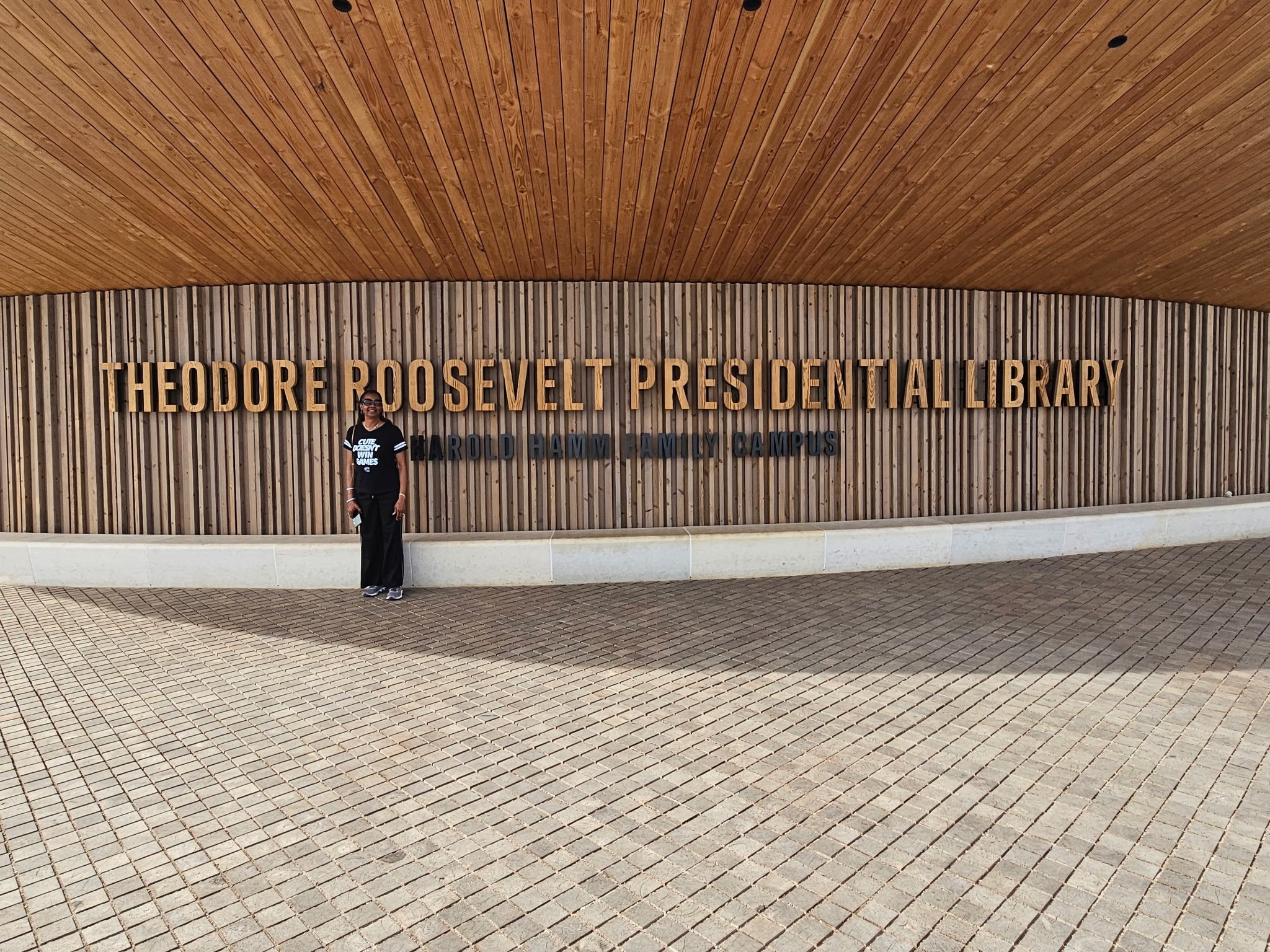
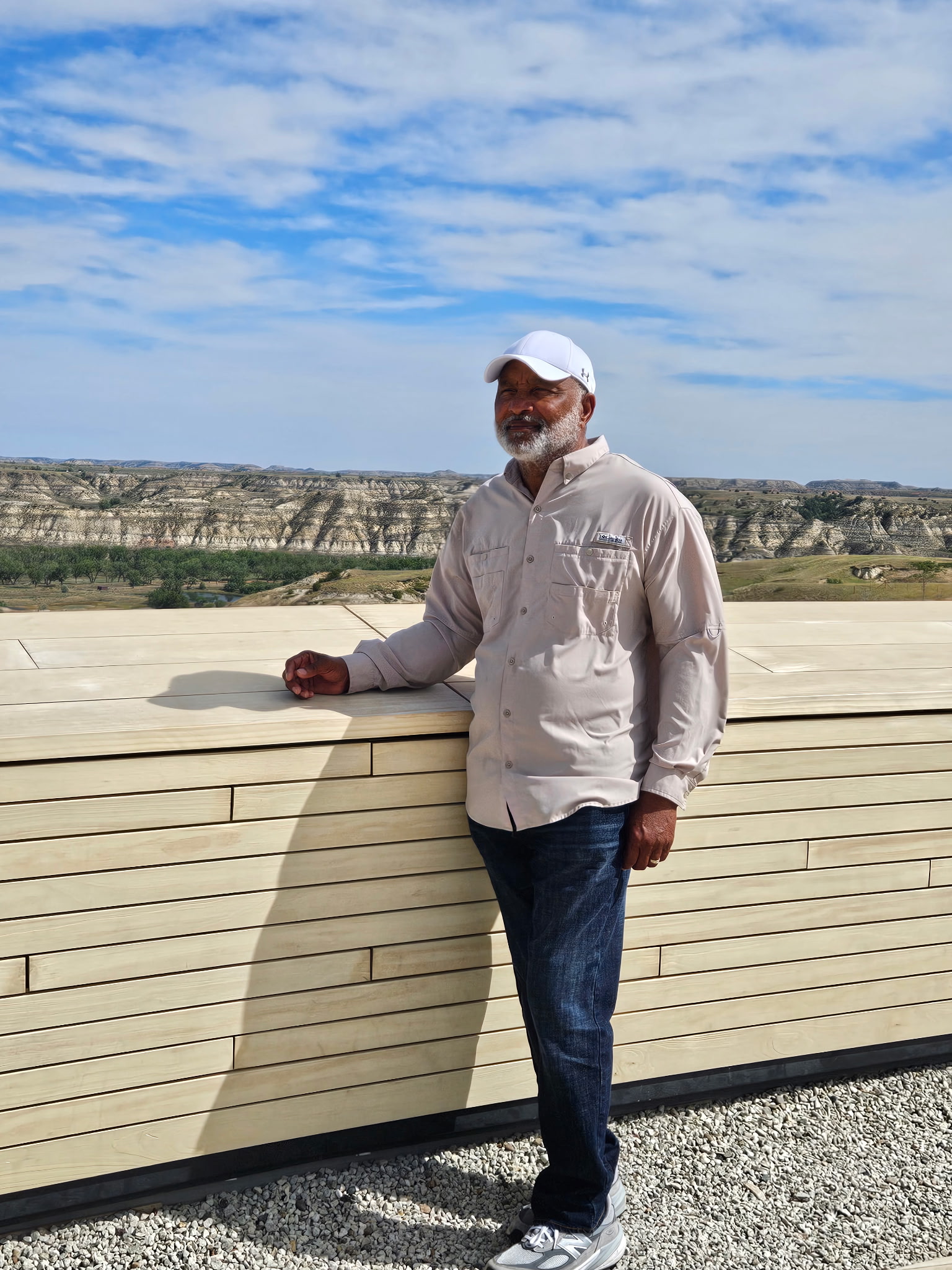
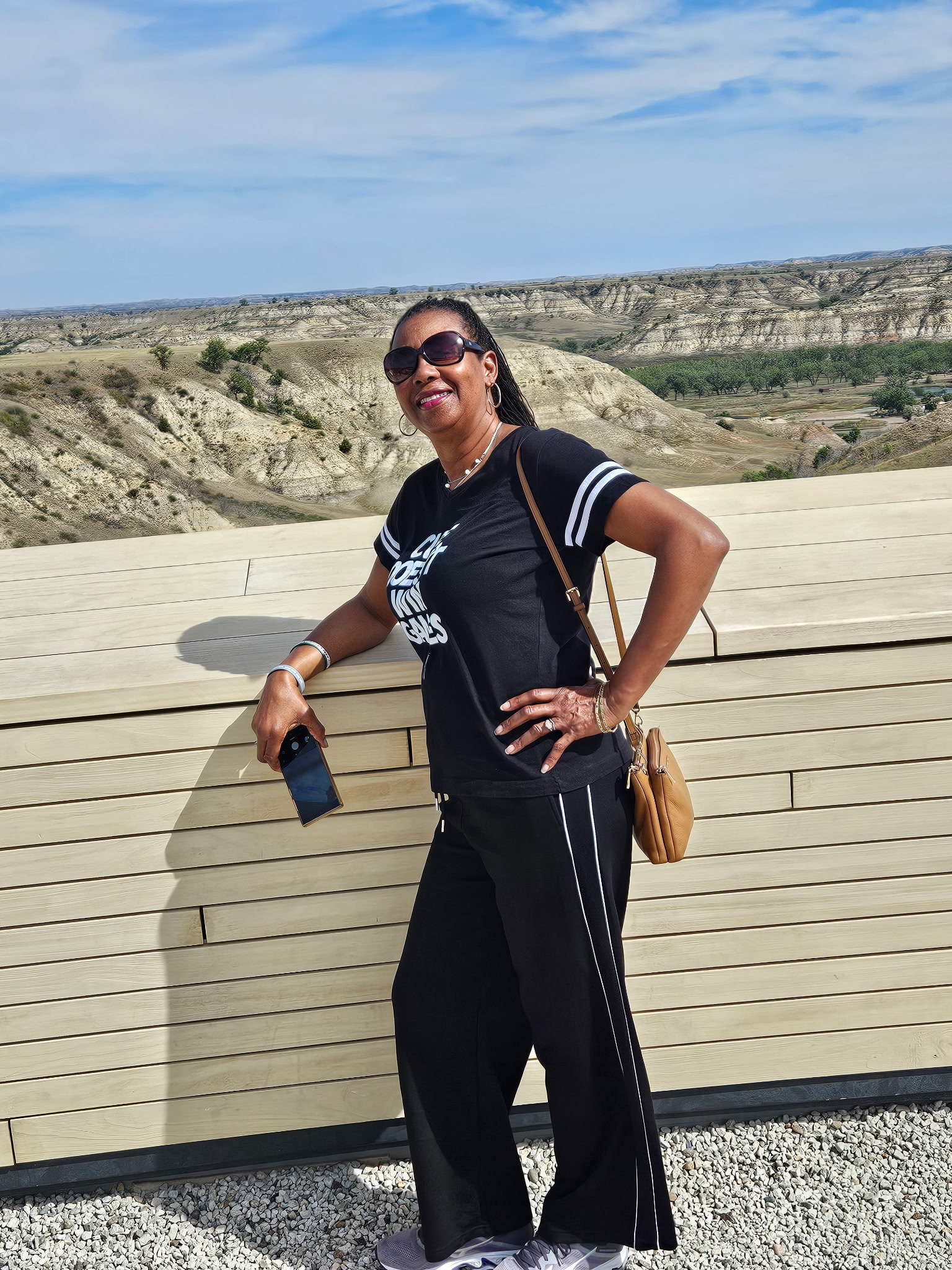
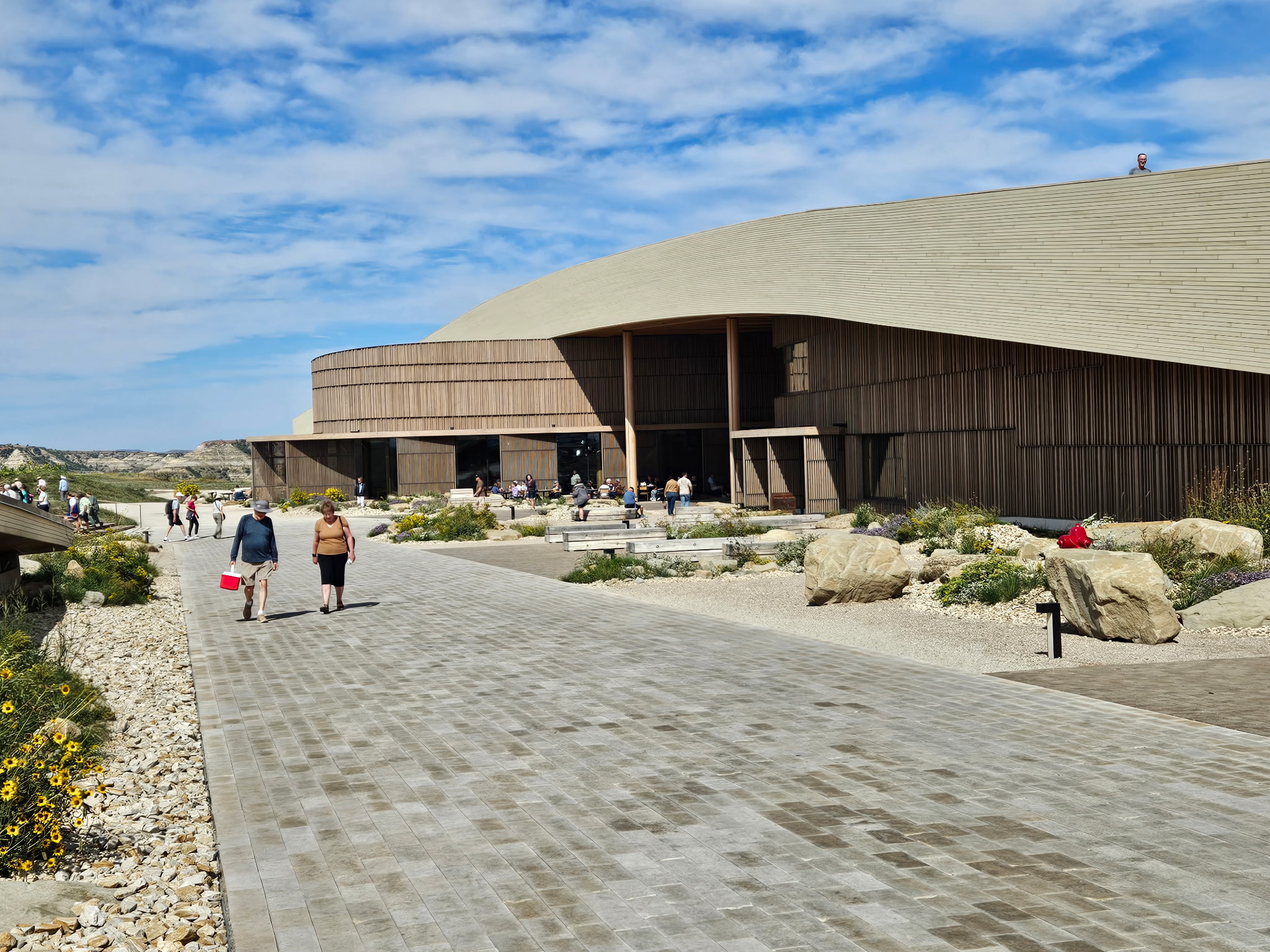
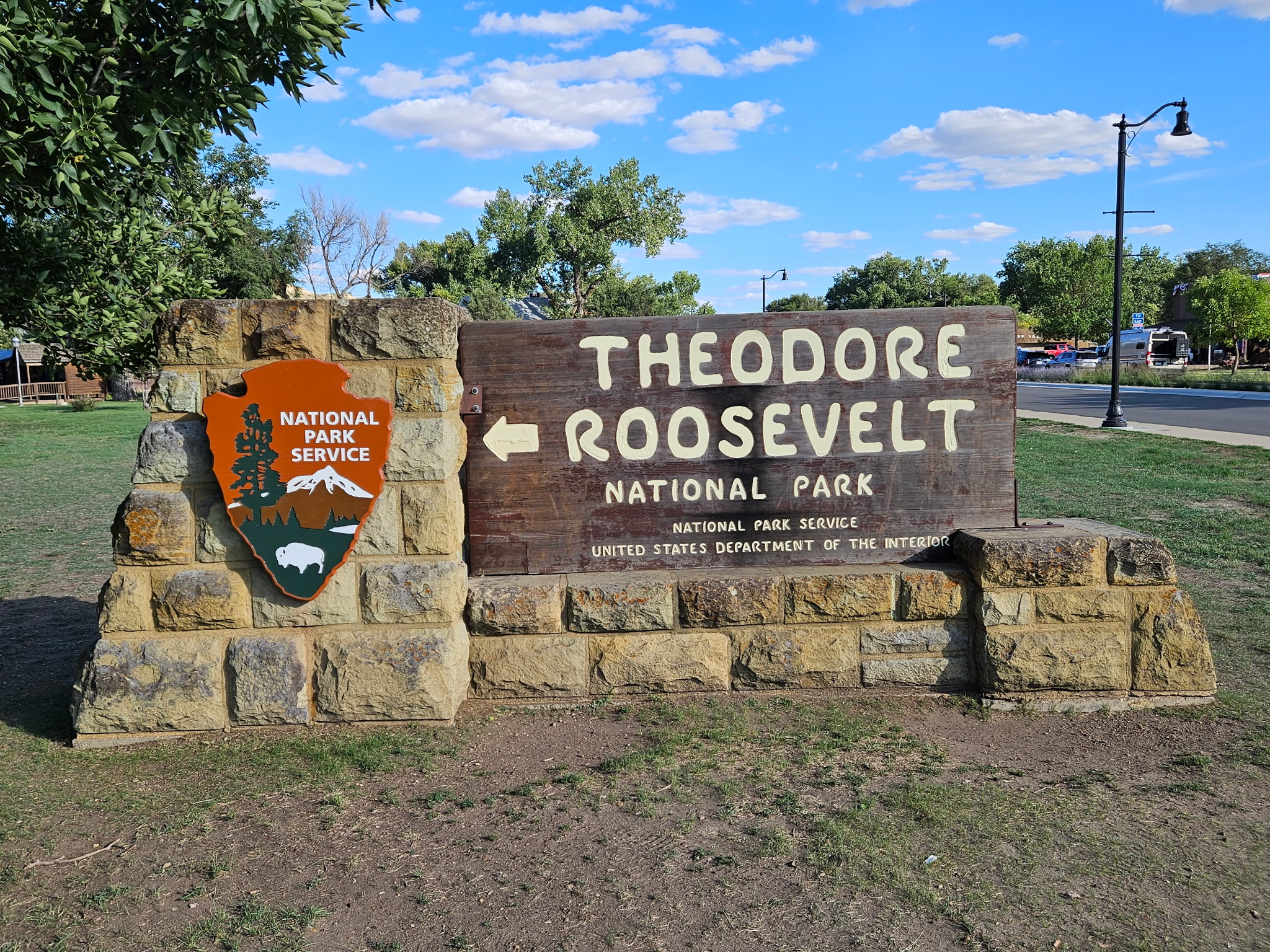
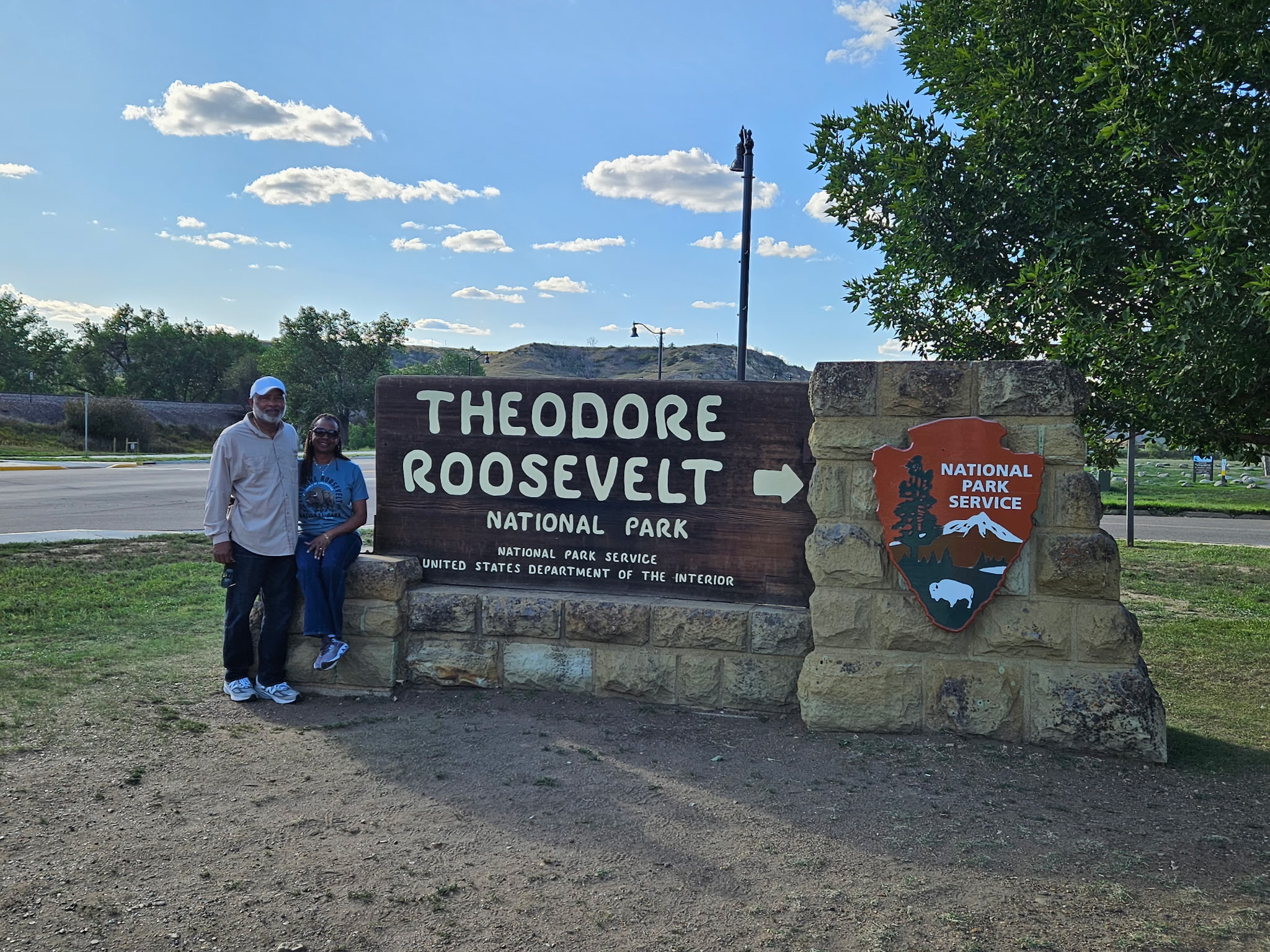
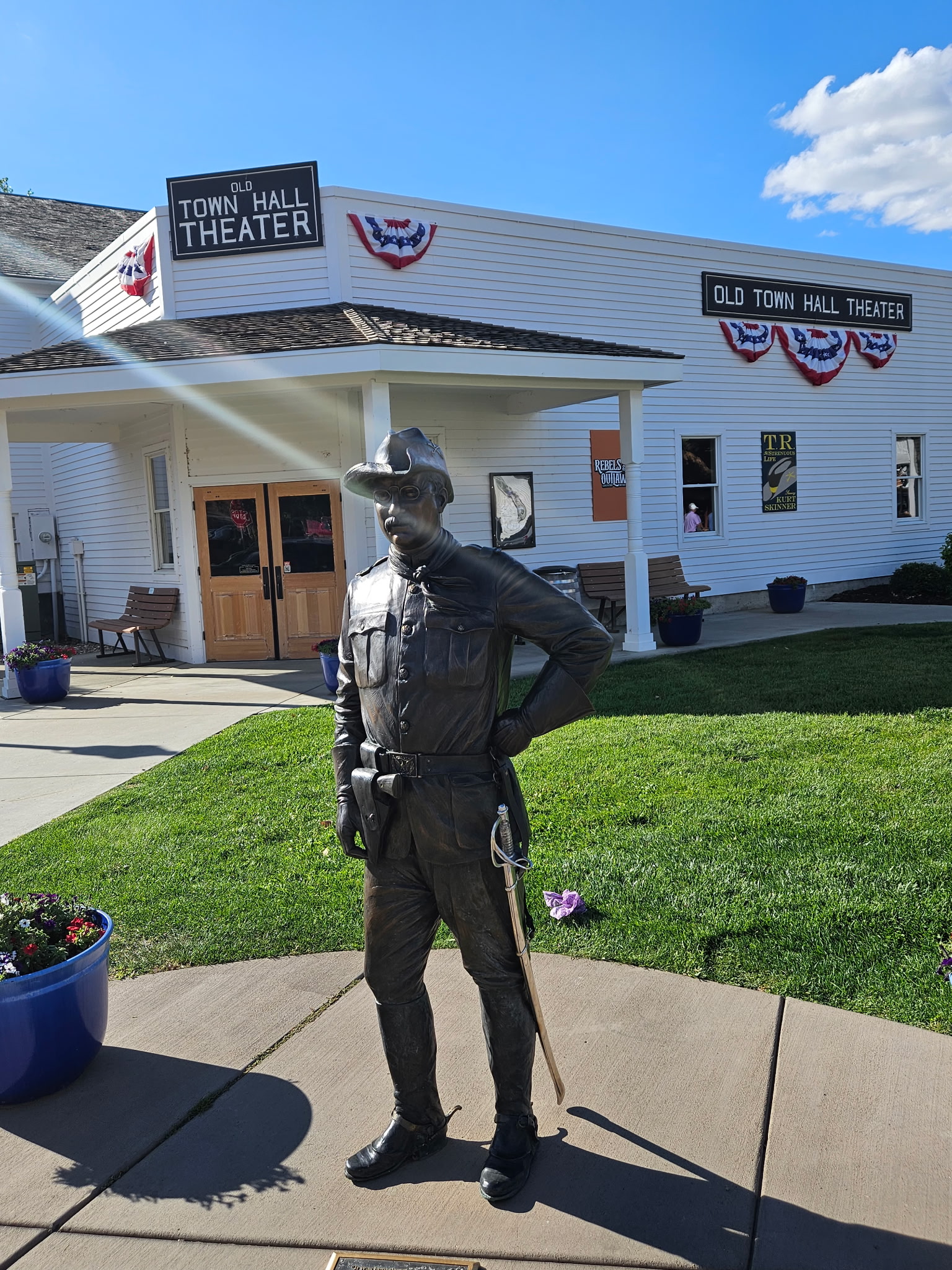
From Billings, we continued our journey into North Dakota and visited the Theodore Roosevelt Presidential Library in Medora. The facility is new, and the experience was a wonderful way to learn more about Roosevelt’s life and his connection to North Dakota.
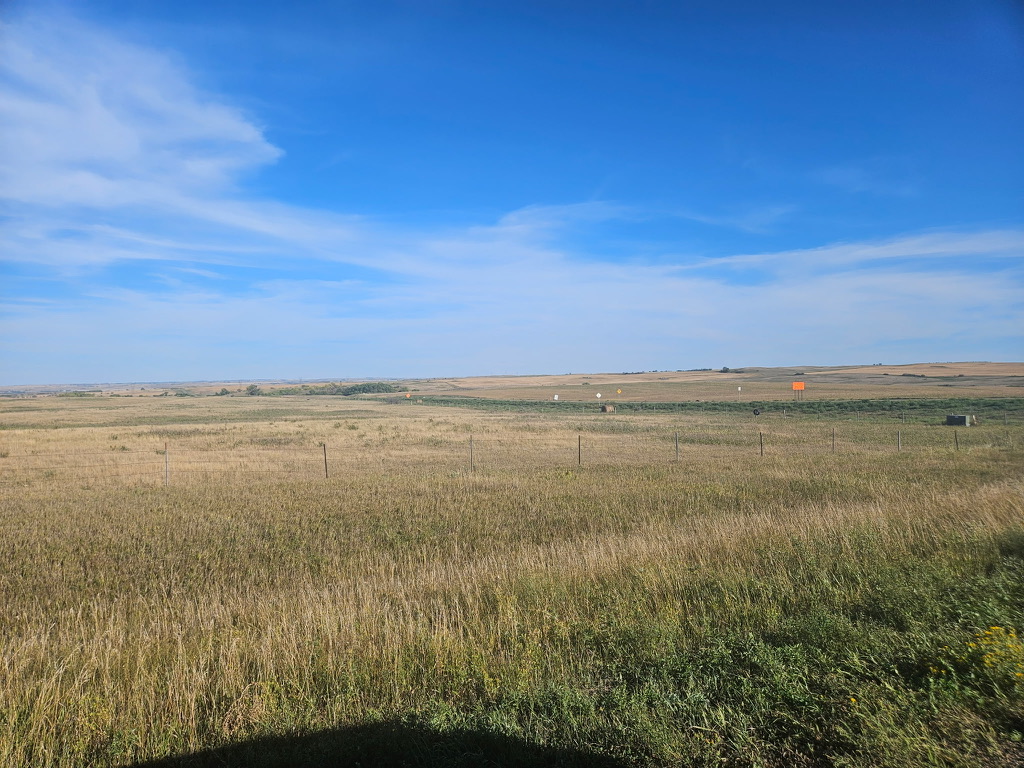
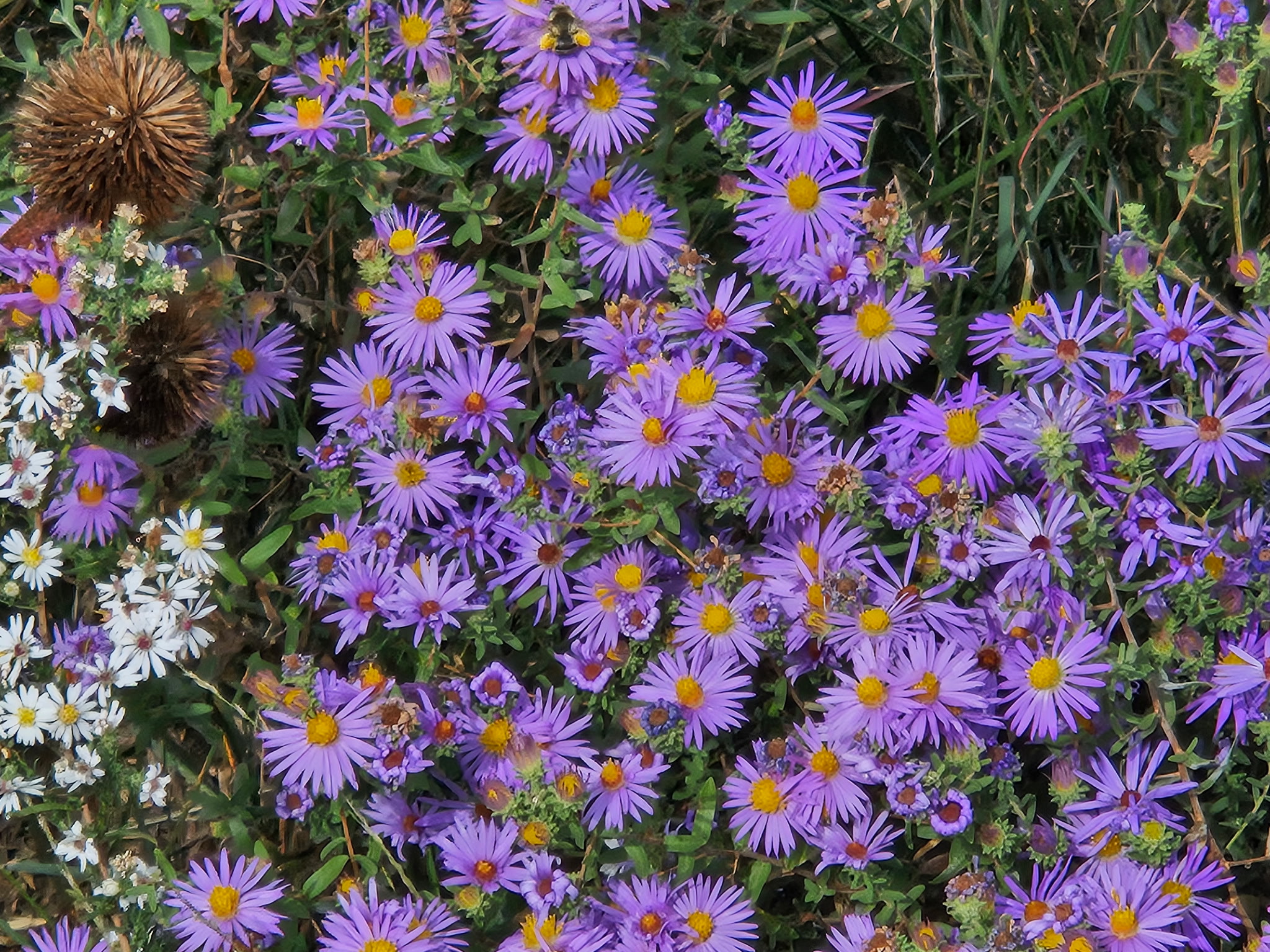
The setting itself is absolutely beautiful—rolling hills, valleys, colorful wildflowers, and wide-open landscapes. Kudos to the architects and landscape designers because the property complements its surroundings beautifully.
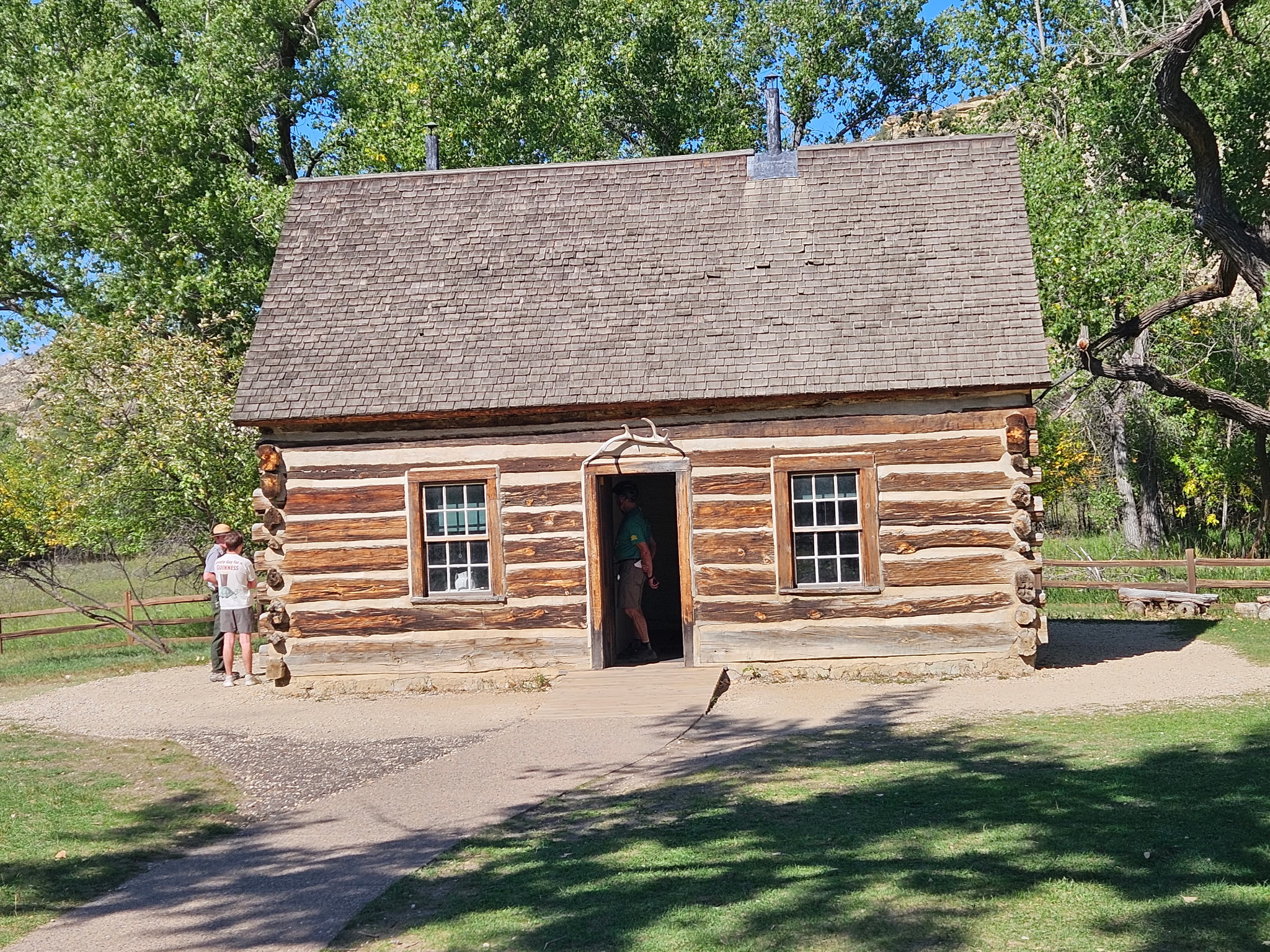
Roosevelt was deeply connected to conservation, wildlife, ranching, and the open spaces of the American West. He first came to the Dakota Territory as a young man and later returned following an unimaginable personal tragedy: his wife and his mother died on the same day. His experiences in the Badlands became an important part of his personal story and his later approach to conservation.
We also took a 36-mile scenic drive through the surrounding area and marveled at the landscape, including fields of sunflowers and daisies along the way.
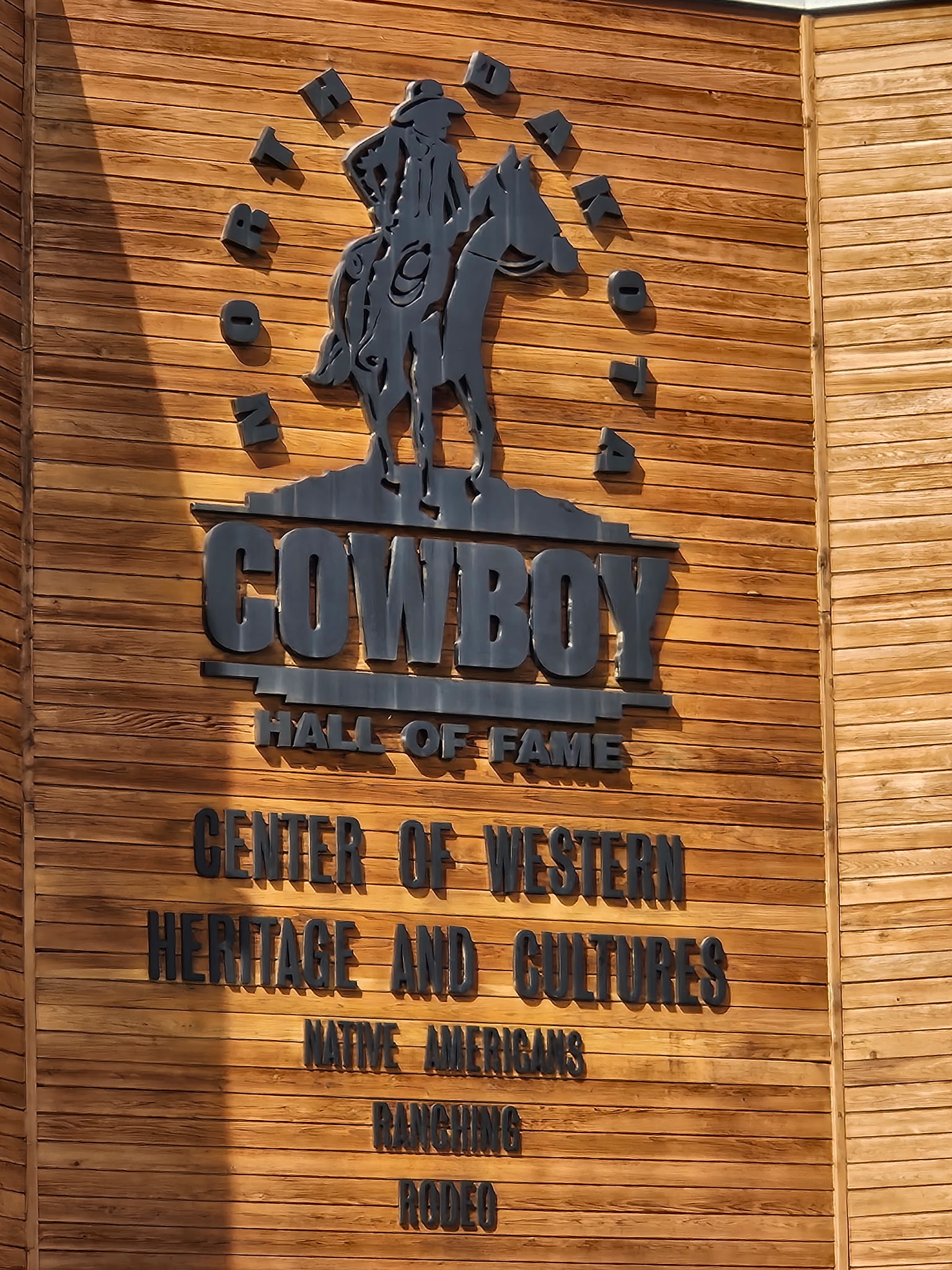
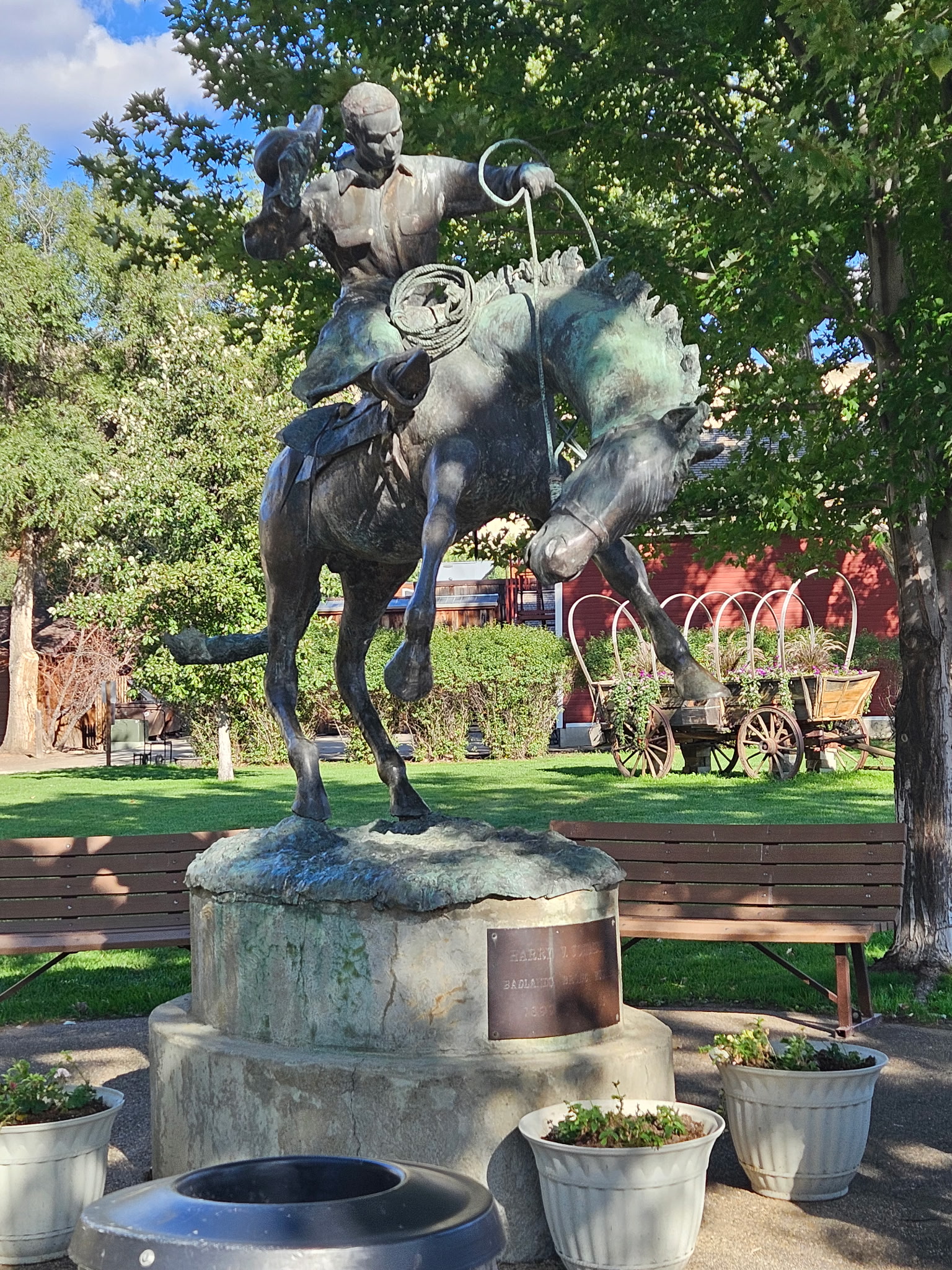
Before leaving the area the next day, we visited a cowboy museum. It was an interesting place, but I left with one major question:
Where are the Black people?
There was little to no representation of African Americans in the exhibits we saw. It was difficult to walk through an entire museum dedicated to the history of cowboys and the American West without seeing that history represented.
Black cowboys, Buffalo Soldiers, ranchers, settlers, and other African Americans were part of the history of the West, too. Their stories deserve to be seen and told alongside everyone else’s.
As we continue this journey, I’m realizing that traveling isn’t just about seeing beautiful places. It’s also about learning the history, asking questions, noticing whose stories are being told—and recognizing whose stories may still be missing.
On to the next adventure! 🏞️


Leave a Reply